Here is my list of players that should breakout in the 2025 season. This article focuses on second year players who should make a big jump.
Rome Odunze (WR, Chicago Bears) After a solid rookie campaign with 734 yards and three touchdowns while excelling in contested catches (13 of 18), Odunze is primed for a massive leap forward in his second season. With Caleb Williams entering Year 2 and the Bears likely addressing their offensive line issues, the improved pocket presence should give Williams more time to find Odunze on intermediate and deep routes. The 6’3″ receiver’s combination of size, route-running precision, and contested catch ability makes him an ideal red zone target, where he should see significantly more opportunities than his rookie year. Chicago’s offensive coordinator will likely design more creative ways to get Odunze the ball in space, building on the chemistry he’s already established with Williams.
Byron Murphy II (DT, Seattle Seahawks) Murphy’s combination of explosive first-step quickness and pass-rush versatility should flourish in Seattle’s defensive system under Mike Macdonald, who has a proven track record of maximizing interior defensive line talent. The former Texas standout will benefit from playing alongside established veterans who can draw double teams, allowing him to win more one-on-one matchups and showcase his disruptive ability. Seattle’s emphasis on creating negative plays and pressuring quarterbacks up the middle aligns perfectly with Murphy’s skill set as a three-technique penetrator. With the Seahawks’ defense expected to take another step forward, Murphy could emerge as one of the premier young interior pass rushers in the NFC.
Keon Coleman (WR, Buffalo Bills) Coleman’s 6’4″ frame and physical style of play make him the perfect complement to Buffalo’s offensive system, especially as Josh Allen continues to develop chemistry with his younger receivers. Despite concerns about his 40-yard dash time, Coleman showed impressive speed during the Gauntlet drill (20.36 mph), indicating he has more athletic upside than initially thought. The Bills’ need for a reliable red zone target and contested catch specialist gives Coleman numerous opportunities to make impact plays in high-leverage situations. With Buffalo’s championship window still open, expect the coaching staff to find creative ways to utilize Coleman’s unique size-speed combination in critical moments.
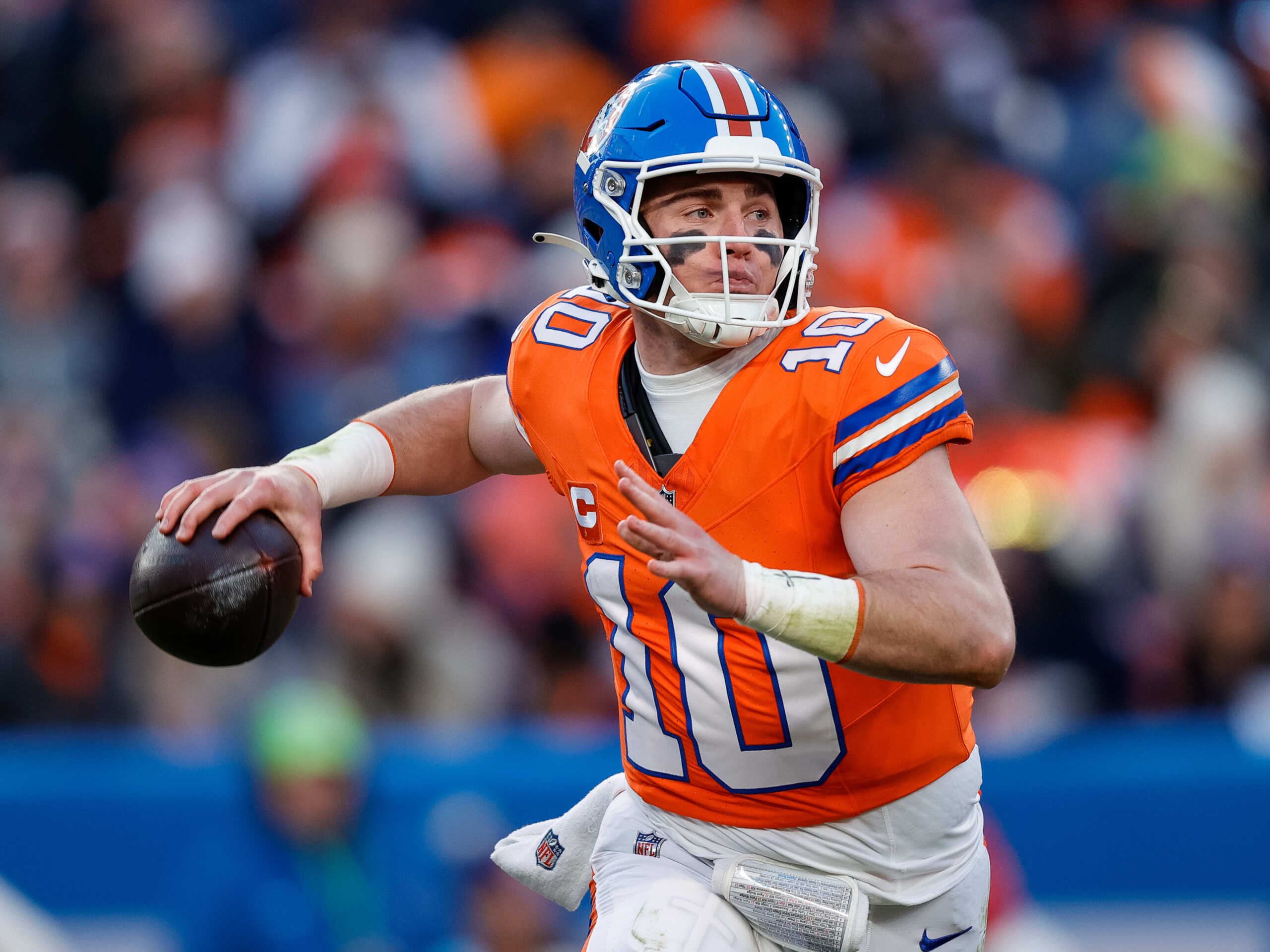
Bo Nix (QB, Denver Broncos) After a strong rookie season that saw him post a 73.8 PFF passing grade and tie for second in big-time throw rate (3.7%), Nix has established himself as Denver’s franchise quarterback moving forward. The Oregon product’s mobility and decision-making should continue to improve as he gains more experience in Sean Payton’s offensive system, which historically has elevated quarterback play. His impressive stats since Week 5 of his rookie year (top eight among all QBs in multiple categories) demonstrate his rapid development and ability to perform at a high level. With a full offseason to work with his receivers and continued development of Denver’s young offensive weapons, Nix could make the leap to Pro Bowl-level production.
Michael Penix Jr. (QB, Atlanta Falcons) Penix’s exceptional arm talent and accuracy on intermediate to deep throws give Atlanta a dynamic element they haven’t had in years, especially if he gets meaningful playing time in 2025. His experience in high-pressure college situations at Washington, including leading the Huskies to the CFP National Championship game, demonstrates his ability to perform on big stages. The Falcons’ offensive weapons, including Drake London, Kyle Pitts, and Bijan Robinson, provide Penix with elite targets who can maximize his downfield passing ability. If given the opportunity to start, Penix’s dual-threat capability and strong arm could unlock Atlanta’s offensive potential in ways that make them a legitimate playoff contender.
Caleb Williams (QB, Chicago Bears) Despite taking a league-high 68 sacks, Williams set Bears rookie records for passing yards (3,541) and touchdowns (20), plus an NFL rookie record with 354 consecutive passes without an interception, showing remarkable composure and accuracy. The Bears’ expected improvements to their offensive line and potential additions of more weapons should dramatically reduce the pressure on Williams while giving him better options in the passing game. His natural arm talent, mobility, and football IQ suggest he’s only scratched the surface of his potential, with Year 2 typically being when young quarterbacks make their biggest developmental leaps. Chicago’s commitment to building around Williams, combined with his work ethic and leadership qualities, positions him to become one of the NFL’s rising star quarterbacks.
Braelon Allen (RB, New York Jets) At 6’2″ and 235 pounds, Allen brings a physical, bruising style that perfectly complements the Jets’ power running scheme and could be exactly what their offense needs to establish consistent ground production. His combination of size and surprising agility makes him an ideal short-yardage and goal-line weapon, areas where the Jets have struggled in recent seasons. Allen’s pass-catching ability out of the backfield adds another dimension to New York’s offensive attack, especially in play-action situations where his blocking prowess keeps Aaron Rodgers protected. With the Jets likely looking to establish a more balanced offensive approach, Allen’s versatility and durability could make him a key contributor in their playoff push.
Troy Fautanu (OT, Pittsburgh Steelers) Fautanu’s elite athleticism and technical soundness make him an ideal fit for Pittsburgh’s offensive system, which has historically developed outstanding offensive line talent. His ability to handle speed rushers and anchor against power moves should provide immediate stability to the Steelers’ offensive line, protecting their quarterback and opening running lanes. The former Washington standout’s work ethic and football IQ suggest he’ll quickly adapt to the NFL level and potentially earn a starting role early in the season. Pittsburgh’s commitment to running the ball and establishing physical play up front aligns perfectly with Fautanu’s skill set and mentality as a mauling, aggressive blocker.
Chop Robinson (EDGE, Miami Dolphins) Robinson’s explosive first step and relentless motor make him a perfect fit for Miami’s aggressive defensive scheme under Mike McDaniel and their defensive coordinator’s emphasis on creating turnovers and negative plays. His Penn State pedigree and experience in big games demonstrate his ability to perform under pressure, which will be crucial in the competitive AFC East. The Dolphins’ need for consistent pass rush production gives Robinson ample opportunities to showcase his speed-to-power conversion and bend around the edge. Miami’s defensive system, which emphasizes getting after the quarterback and creating havoc, should allow Robinson to develop into a double-digit sack threat by season’s end.
Tailese Fuaga (OT, New Orleans Saints) Fuaga’s combination of size, athleticism, and technical refinement from his Oregon State days makes him an immediate upgrade to New Orleans’ offensive line protection schemes. His ability to handle both power and speed rushers should provide crucial stability for the Saints’ passing game, especially as they look to maximize their offensive weapons. The Saints’ emphasis on running the ball and controlling the line of scrimmage plays directly into Fuaga’s strengths as a physical, mauling blocker who excels in gap schemes. New Orleans’ veteran leadership and coaching staff should help accelerate Fuaga’s development, potentially making him one of the most reliable young tackles in the NFC South.
Laiatu Latu (EDGE, Indianapolis Colts) Latu’s proven pass-rushing ability from his UCLA days, combined with his size and technique, gives Indianapolis a legitimate threat off the edge that they’ve desperately needed. His ability to convert speed to power and use hand techniques to disengage from blockers should translate immediately to the NFL level, especially in obvious passing situations. The Colts’ defensive system under their coordinator emphasizes creating pressure and forcing turnovers, which aligns perfectly with Latu’s disruptive style of play. With Indianapolis looking to take the next step in the competitive AFC South, Latu’s pass-rushing prowess could be the catalyst that elevates their defense to playoff-caliber performance.
Theo Johnson (TE, New York Giants) Johnson’s 6’6″ frame and athletic ability make him an ideal target for Daniel Jones in the red zone and on intermediate routes where his size advantage can create mismatches against linebackers and safeties. His Penn State background and experience in physical, grinding offensive systems should help him adapt quickly to the NFL level and earn meaningful snaps early in the season. The Giants’ need for reliable receiving options and his blocking ability give Johnson multiple pathways to contribute, whether as a pass-catcher or in run support. New York’s offensive coordinator will likely design specific packages to utilize Johnson’s unique skill set, potentially making him a key component of their offensive revival plans.